Posts

Showing posts with the label organic chemistry

Decoding Krebs Cycle II: Completing the Cycle
Image
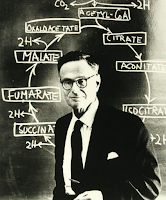
... One of the metabolic processes is called citric acid cycle (CAC) or famously known as Krebs cycle; named after its discoverer Hans Krebs. Hans Krebs himself was awarded Nobel Prize in Physiology or Medicine in 1953... In part I, we decoded half of the Krebs cycle as citrate ion (6C) is converted to succinyl-CoA (4C) after several steps. Afterwards, in succinyl coenzyme synthetase (CSC) succinate (4C) is formed from succinyl-CoA (4C) with helps of either GDP or ADP.
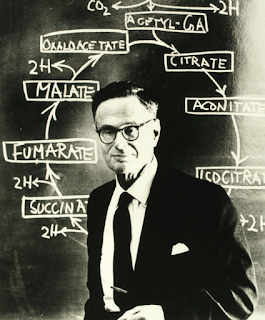
Decoding Krebs Cycle I: Citrate (6C) to Succinyl-CoA (4C)

Image
Hans Krebs The way living things can maintain its function, do many activities, or just simply to survive in this harsh world sometimes can be mysterious. However, there is one way to understand these mysterious processes and science, especially chemical science, can help us to understand these processes. These processes are sometimes metabolic processes and it can be seen as chemical reactions that happen in living things, from bacteria to blue whale. One of the metabolic processes is called citric acid cycle (CAC) or famously named Krebs cycle; named after its discoverer Hans Krebs. Hans Krebs himself was awarded Nobel Prize in Physiology or Medicine in 1953.

How Trivial is It to Make Amides?

Image
Amide is one of the organic functional groups that can be found ubiquitously in the nature. It plays important role in living things as the main building blocks of proteins which involve with many functions, from catalysis to structural support. Besides that, amide functionality is featured in many natural products and drugs. Examples of peptide-bearing compounds Since, it is quite common to find this functionality in natural products and synthetic compounds, a question is raised from this phenomenon. How trivial is it to make amide bond?

Bulk Heterojunction Solar Cell

Image
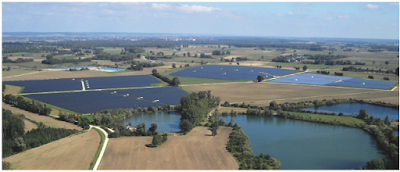
25.7 MW Lauingen Energy Park, Germany As part of solutions for the climate change, the demand for 'clean' energy has increased in the recent years. One of the piece of technologies that can fulfil this demand is solar cell which it can harness the solar energy. At this stage, the conventional solar cell, which is made of a thick layer of doped-silicon, is very expensive and the manufacturing process is energy consuming process. Another type of solar cell, dye sensitised solar cell (DSSC) or Grätzell cell, can be a solution for the expensive silicon solar cell. Instead of expensive silicon as semiconductor, cheaper TiO 2 is used and ruthenium-based complex compound as solar light harvester. However, this cell has a problem with solvent leakage, which can be  not environmentally friendly. The efficiency of this cell is also a problem; DSSC's efficiency is up to 11% while Si-based solar cell can be up to 25%. To address these problems, another type of solar cell has been ...

A (Brief) History of the Chemistry of Natural Products

Image
In these days, the chemistry of natural products is still a massive attraction for chemists, especially organic synthetic chemists. New substances, more or less complicated, more or less useful, are constantly discovered and investigated with all the techniques and tools that the early organic chemists could only imagine. In the course of these studies, the researchers are challenged by the preparation of the compounds which somehow drives this field forward. This time, we'll see the historical perspective of this 'ancient' research field and also future prospective that chemistry of natural products can offer.

The Chemistry Behind the Gifts for the King of Kings

Image
This time, it is less than a week until Christmas and it is quite appropriate if this time we are digging one of the stories around Christmas, which is the adoration of the magi. The magi, sometimes they are called the wise men or kings, travelled from far east to Bethlehem following the Star of Bethlehem to pay homage to the Infant Jesus. They also brought three gifts to be given to the King of kings: gold, frankincense, and myrrh. This story and the gifts they brought are immortalised in several Christmas carols, one of them is  "We Three Kings " by John Henry Hopkins. We Three Kings  arr. Martin Neary and sung by King's College Choir at 2012 Festival of Nine Lessons and Carols. For lyrics, click here . This time, for Christmas special, we'll see the chemical significance of those gifts for the Infant Jesus.

How to Create Your Own Lilliputians?

Image
Chemical synthesis has become a great tool in exploring interesting structures such as natural products. However, this is not only limited into the natural products, the ultimate designed in miniaturisation can also be attained such as nanocar . Researchers from Houston, USA successfully created a new class of 2 nm-tall human-like, anthromorphic, compounds. This class of compound is dubbed as NanoPutians, after Liliputians from Jonathan Swift's classic Gulliver's Travel. The first edition of Jonathan Swift's Gulliver's Travel  

Strictamine

Image
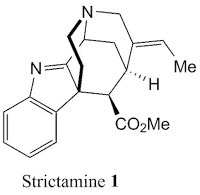
It was isolated for the first time in 1966 from the plant Rhazya stricta , strictamine (1)  has been a great interest due to its unique properties. Strictamine belongs to the group of akuammiline alkaloids which is the family of monoterpenoid indole alkaloids. This compound has been showed to inhibit the nuclear factor-𝜅B (NF-𝜅B), which plays an important role in immune and inflammatory responses. Apart from its bioactivity, strictamine has attracted synthetic chemists because its structure bearing a tricyclic unit of methanoquinolizidine. This interesting challenge causes only four groups - Garg (enantioselective), Zhu (racemic), Ohno (formal synthesis), and Gaich (formal synthesis) - have managed to complete a total synthesis of strictamine. This time on " Totally Synthesised" , we will see synthetic strategy by Gaich's group which used [2,3]-Stevens rearrangement to build the methanoquinolizidine unit.

Powering the Molecular World

Image
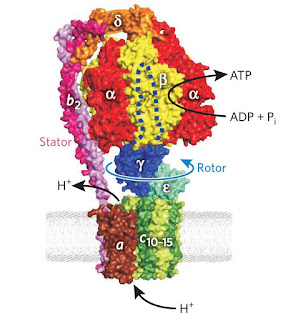
In biological process, molecular machines are one of the examples of the most intricate functional molecules and have been attracted many chemists recently. Inspired from this idea, synthetic molecular machines have been developed ranging from synthesizers to motors, but there are no synthetic molecule machines that operate autonomously using chemical energy; in biological process ATP is used as the chemical energy or fuel. One of the example of motor protein: ATP synthase. (J. Weber, Nat. Chem. Biol. , 2010, 6  794-795) Leigh's group from the University of Manchester successfully created a system in which small molecular ring is transported around a cyclic molecular track when powered by irreversible reaction.

Dilution-Induced Aggregation of Nanoparticles

Image
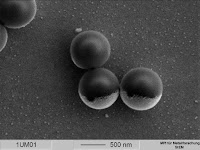
The ability of nanoparticles to self-assemble forming larger structures is determined by the details of the forces between particles. This mean of interaction has led to novel concepts in self-assembly such as in colloids and Janus particles (type of nanoparticles with two or more physical properties of its surface). Recently, some models that include attractive region or 'patches' on the surface of nanoparticles have been made and predict intricate modes of assembly and these interactions are also important in a range of phenomena including protein aggregation and crystallisation. Example of Janus particles (accessed http://www.pi2.uni-stuttgart.de/cms/index.php?article_id=156) Meijer's group Eindhoven University of Technology successfully synthesised 6-nm nanoparticles with dynamic hydrophobic patches and it can self-assemble reversibly in water.

Eleutherobin

Image
The generosity of mother nature is limitless and it will not stop giving for humankind to thrive. Besides that, nature has been a close friend with chemists especially organic chemists. Complex structures of natural products have been a great interest as it provides to develop synthetic methods to synthesise natural products. One of the 'hunting grounds' of synthetic organic chemists is the sea, and one of the products is called eleutherobin, 1 . Eleutherobin can be isolated form a species of marine soft corals Eleutherobia  collected in the Indian Ocean near Bennett's Shoal in Western Australia. Despite its rarity, eleutherobin is a potent compound against selected breast, renal, ovarian, and lung cancer cells. This highly potential compound drove Nicolaou's group to synthesise this compound.

Four-Wheel Drive in Molecular Level

Image
Machinery has propelled human civilisation into another level by helping us to perform tasks beyond our capability. In decades, human has made different type of machines with various of sizes; from enormous machine into molecular-size machinery. The ideas of molecular-size machinery are inspired from the nature in the cellular level such as ATP synthase motor and kinesin transporter. ATP synthase motor (right, J. Weber, Nat. Chem. Biol. , 2010, 6 , 794-795) and Feringa's nanocar (left, ©Johan Jarnestad/The Royal Swedish Academy of Sciences) One of the prominent examples of the molecular machines is Feringa's nanocar  where the molecule is propelled by four rotating molecular motors.

Bending It Further: Porphyrin Nanotube

Image
The synthesis of supramolecules has become an intense interest in the recent years, especially conjugated π-system. In the previous post , a cyclic octamer of porphyrin was synthesised and it gives optical interesting properties. Increasing its dimensionality, such as into barrel-like structure, could enhance electronic delocalisation and perhaps leading to exotic properties such as Aharonov-Bohm oscillation. This property has been observed in single-walled nanotubes (SWNTs) but it hasn't yet been detected in molecular materials, so this gives motivation for synthetic chemist to synthesise the molecular SWNT to observe this exotic property. Anderson's group from Oxford University successfully synthesised porphyrin tube 1  which consists of 12 porphyrins, each of which is directly conjugated to its three neighbours.

The Nobel Prize in Chemistry 2016

Image
The Royal Swedish Academy of Sciences  has decided to award the Nobel Prize in Chemistry 2016 to \ Jean-Pierre Sauvage (University of Strasbourg, France) Sir J. Fraser Stoddart (Northwestern University, Evanston, IL, USA) Bernard L. Feringa (University of Groningen, the Netherlands) "for the design and synthesis of molecular machines"

Bending the Molecular Wires

Image
Recently, large conjugated π-systems have been a great interest due to their unique properties such as electrical conductivity, or they are commonly known as molecular wires. Taking a step further, it can be closed into a large cyclic system, i.e. macrocyle, or known as a closed loop. One of the examples of this system is porphyrin oligomers where linear conjugated porphyrin oligomers show strong long-range electronic coupling and rich non-linear optical behaviour. These unique properties provide a motivation for synthesising its macrocycle and probing its properties.

Ecteinascidin 743

Image
One of the main attractions in the chemistry of natural products, apart from facing new challenges in synthetic methodologies, is discovering a novel therapeutic agent such as ecteinascidin 743 (ET-743) . This compound was isolated for the first time as pure compound from Caribbean tunicate Ecteinascidia turbinata in 1986 by Rinehart's group. This compound possess interesting properties as a potent anti-tumour agent and ET-743 is approved in Europe, Russia and South Korea for treatment of advanced soft tissue sarcoma. From synthetic chemists' point of view, ET-743 provides an interesting challenge as it has interesting molecular architecture; comprised of eight rings, including 10-membered heterocycles and 8 stereogenic centres. This interesting molecular architecture and interesting anti-tumour properties were the motivation of its first total synthesis by E. J. Corey in 1996.

Chiral Auxiliary Controlled Reactions

Image
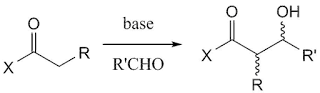
Previously, in asymmetric aldol reaction a chiral enolate is used to ensure diastereoselective reaction by introducing more control due to chiral centre at enolate or carbonyl. This time, another method is used to synthesis an enantiopure product which is using chiral auxiliary functional group. Chiral auxiliary-controlled aldol reaction In this method, an enantiopure auxiliary (X C ) is used and it carries out a diastereoselective reaction such as aldol reaction. Furthermore, the reaction provides enantiopure product after removal of the chiral auxiliary.

Asymmetric Aldol Reactions

Image
One of the well-known reactions in C-C bond formation is aldol reaction. This robust reaction has a great potential in controlling two stereocentres of the product. General aldol reaction The control on the stereocentres of the product is determined from the stereochemistry of the formed enolate; Z - and E - enolates would give different control on the outcome of aldol products.

Carbonyl Addition: Bürgi-Dunitz angle and Felkin-Anh control

Image
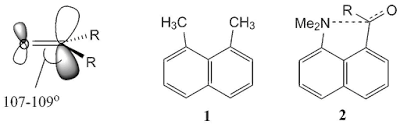
In nucleophilic addition in carbonyl compounds, it involves breaking π(C=O) bond by adding electrons into C=O antibonding orbitals. This implies the trajectory of attack for addition of a nucleophile follows the shape  of π*(C=O) allowing proper overlap with the orbitals. The trajectory of this nucleophile is around 107-109° and this angle is called Bürgi-Dunitz angle; named after H. B. Bürgi and J. D. Dunitz who discovered the physical evidence that supports the this angle of attack (H. B. Bürgi, J. D. Dunitz, and E. Shefter, J. Am. Chem. Soc., 1973, 95 , 5065-5067). Bürgi-Dunitz angle and the evidence of the trajectory of nucleophilic attack.

Cytovaricin

Image
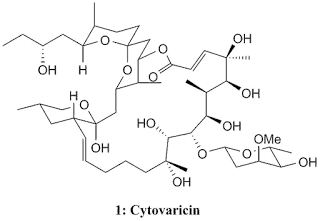
Cytovaricin, 1 , was isolated by Isono's group in 1981 from a culture of Streptomyces diastatochromogenes and the structure was elucidated in 1983 from X-ray crystallography. From its structure, cytovaricin was revealed to have such an elegant and complex structure with 22-membered macrolide structure as its framework and possessing 17 stereocentres, a spiroketal, and a glycoside unit giving four more stereocentres. This highly complex molecule give a unique challenge to organic chemists in asymmetric synthesis. The structure elucidation of cytovaricin was triggered from the finding that it is a potent inhibitor against sarcoma cells in tissue culture which makes cytovaricin a new potential as antineoplastic antibiotic. Besides that, cytovaricin appears to be related biogenetically to the oligomycin/rutamycin antibiotic family.