Posts

Showing posts with the label heterocycles

Strictamine

Image
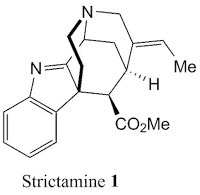
It was isolated for the first time in 1966 from the plant Rhazya stricta , strictamine (1)  has been a great interest due to its unique properties. Strictamine belongs to the group of akuammiline alkaloids which is the family of monoterpenoid indole alkaloids. This compound has been showed to inhibit the nuclear factor-𝜅B (NF-𝜅B), which plays an important role in immune and inflammatory responses. Apart from its bioactivity, strictamine has attracted synthetic chemists because its structure bearing a tricyclic unit of methanoquinolizidine. This interesting challenge causes only four groups - Garg (enantioselective), Zhu (racemic), Ohno (formal synthesis), and Gaich (formal synthesis) - have managed to complete a total synthesis of strictamine. This time on " Totally Synthesised" , we will see synthetic strategy by Gaich's group which used [2,3]-Stevens rearrangement to build the methanoquinolizidine unit.

Synthesis of Heteroaromatic Compounds: Indoles and 6-Membered Rings

Image
In this section, we will see the synthesis of other types heteroaromatics which are indoles and 6-membered rings. Unsurprisingly, those classes of heteroaromatics are common in the organic compounds such as in pharmaceutical and in natural products.  This syntheses will be carried in the same principles as the 5-membered ring heteroaromatics, which is carbonyl chemistry.

Synthesis of Heteroaromatic Compounds: 5-Membered Rings

Image
Heteroaromatic compounds are commonly found in pharmaceutical, agrochemicals and many known chemicals in the world. In this section, we will see how heteroaromatic compounds can be synthesised and if we examine closely the key reactions in making heteroaromatic compounds are the carbonyls chemistry.

Heterocyclic Chemistry: Properties of Heteroaromatic Compounds

Image
In this section, we will see the properties of heteroaromatic compounds especially their ability as nucleophile and as base. Besides that, we will also see the 5-membered heteroaromatic can also act as an acid. All those properties can be derived from its structure and the bonding.  Just to reiterate again for this section, the quoted value of p K a  in the discussion of basicity is the p K a  of its conjugate acid. 

Heterocyclic Chemistry: Properties of Saturated Heterocyclic Compounds

Image
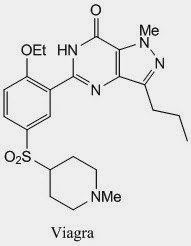
In this section, we will continue to see into the properties of heterocylic compounds using the information about its bonding and structure. Besides that, in this section will mainly discuss about its basicity.

Heterocyclic Chemistry: Structure

Image
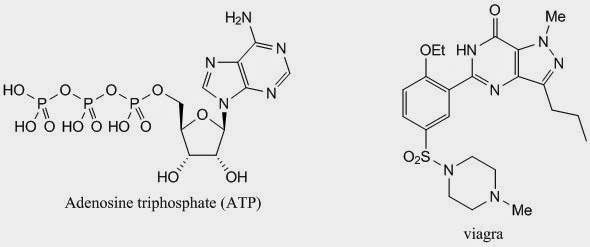
Heterocyclic compounds are very common feature in most of the known molecules, especially in nature. They can be found in DNA, alkaloids and vitamins but they also an important constituent of agrochemicals, pharmaceuticals etc. In this section, we will try to explore about the structure and their reactivity, especially as the basicity of heterocyclic compounds.