Posts

Showing posts with the label d- and f- block

Cisplatin: the First-Line Drug for Nearly All Tumours
Image
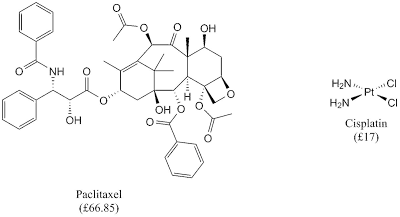
In the recent decade, chemists have taken nature as its inspiration in many ways; one of them is in medicinal chemistry. Many natural products have been screened for their bioactivities to develop new generation of therapeutic agents for 'incurable' diseases such as cancer. However, there is one major drawback from taking natural product as drug. This problem is its complex structure which makes it difficult to synthesise especially in large scale. Anticancer drugs: natural products (paclitaxel) and coordination complex (cisplatin) Luckily, a simple coordination complex, such as cisplatin, gives similar efficacy as natural product-based drug and simple coordination complex is used to treat 80% of all solid cancers. It is noteworthy that the market for this drug is around $1 billion.

The Chemistry Behind the Gifts for the King of Kings

Image
This time, it is less than a week until Christmas and it is quite appropriate if this time we are digging one of the stories around Christmas, which is the adoration of the magi. The magi, sometimes they are called the wise men or kings, travelled from far east to Bethlehem following the Star of Bethlehem to pay homage to the Infant Jesus. They also brought three gifts to be given to the King of kings: gold, frankincense, and myrrh. This story and the gifts they brought are immortalised in several Christmas carols, one of them is  "We Three Kings " by John Henry Hopkins. We Three Kings  arr. Martin Neary and sung by King's College Choir at 2012 Festival of Nine Lessons and Carols. For lyrics, click here . This time, for Christmas special, we'll see the chemical significance of those gifts for the Infant Jesus.

The Most Noble Complex Compound

Image
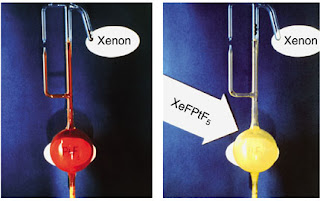
Bartlett's oxidation of Xe using PtF 6   The noble gas compounds have been a great interest since the creation of its kind, XePtF 6 , in 1962. Since then, many xenon compounds with direct bonds to fluorine, oxygen, nitrogen, carbon, xenon itself, and chlorine have been established. However, all these bonded atoms are electronegative main-group elements but there have been several indications that metal-xenon bonds can be formed and detected such as (CO) 5 Mo...Xe. Besides that, The Au-Xe + has been detected by mass spectroscopy and has been calculated with a best estimate for the bond distance of 257 pm. Researchers from Germany successfully created the first metal-xenon square planar compound with direct Au-Xe bond.

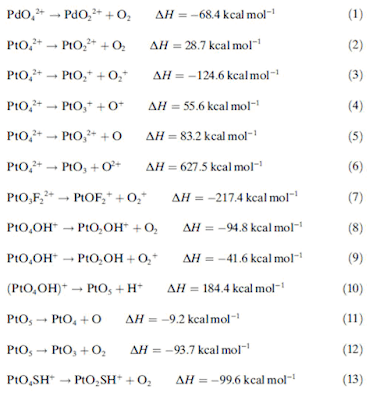
+10 Oxidation state, Exist or Not Exist?

Image
Chemical physicist and spectroscopist C. K. Jørgensen once said that one of the major goals of inorganic chemistry is to prepare compounds of elements in unusual oxidation states. In 2009, the range of oxidation states produced from chemical reaction was -4 to +8, and in 2010 Himmel's group showed that Ir compound with +9 oxidation state, [IrO 4 ] + , exists by electronic structure calculations. In 2014, Wang's group confirmed the existence of the Ir(IX) by matrix-isolation experiments. From these ideas, can it be stretched further? Let say oxidation state +10?

Storage and Transport of Iron in Living Things

Image
Fe is known as the most abundant metal in the human body and it also comes with variety of functions such as haemoglobin ( O 2 transport in blood), myoglobin ( O 2 storage in muscle), cytochrome c (electron transfer), catalase (metabolism of H 2 O 2 ), and ribonucleotide reductase (transformation of RNA to DNA). Left to right: Haemoglobin, myoglobin, catalase, and ribonucletide reductase However, there are two major problems associated with handling it in biological system. Firstly, in aqueous environment, the stable oxidation state of Fe is Fe(III) which precipitates as the insoluble hydrated oxide [FeO(OH) ] n or rust. Besides that, free iron is also toxic as traces of high-spin Fe(II) generates superoxide radicals and hydroxyl radicals which are highly reactive and damage cells. Therefore, whole process of Fe transport and storage keeps Fe under very close control; concentration of free iron in mammals is around 10 -24 M.

Oxygen-Atom Transfer: Cytochrome P450

Image
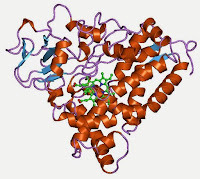
Cytochrome P450 from Pseudomonas putida Cytochrome P450 is another example of metalloproteins that has Fe-porphyrin complex and the name P450 arieses from the absorption maximun of Fe-CO adduct at 450 nm. P450 acts as an oxidising agent and it can oxidise relatively inert and unreactive organic substrates by transfer of a single O atom. This process is known as 'mono-oxygenase' activity and it is essential for both oxidation of natural 'endegenous' products as part of metabolism and oxidation of foreign 'xenobiotic' toxins as part of their destruction. However, this activity is not selective so it can also turn relatively harmless compounds into harmful ones. Furthermore, this such control controlled oxidation of unreactive hydrocarbon under mild conditions is different in synthetic chemistry.

Biocoordination Chemistry: Oxygen Transport

Image
It is a common misconception that there is a mysterious property of organic compounds that made life possible. The pioneering research by Friedrich Wohler on the conversion ammonium cyanate to urea broke this 'vital force dogma'. In the human body, it contains around 1 kg of essential metals per 75 kg adult, from Ca as the most abundant in the body (1050 g) to some transition metals (mainly the first row transition metals). The transition metal ions are bound in proteins to give metalloproteins. Although the molecules may be complex but principles are familiar from basic coordination chemistry. A metallprotein is just a big coordination complex in which the protein acts as a polydentate ligand, controlling environment around, and behaviour of, metal ion. The main focus for this time is on the oxygen transport system in haemoglobin/myoglobin and haemocyanin. Left to right: haemoglobin, myoglobin, haemocyanin

The Chemistry of d- and f- Block: Trends in Stability Constant and The Application of Complex Chemistry

Image
In this section, we will see the trends in stability constant where the ligands and the metal ions are changed. We will see some patterns that build up this concept about the trends and end up in hard and soft acid base theory. Lastly, in this section we will see how complex chemistry is used in our daily life.

The Chemistry of d- and f- Block: The Chelate Effect

Image
In this section, we will build up one of the concept of the trend in stability constant where changing the ligands into chelating agent has effect on the stability constant. A chelating agent or a chelate can be defined as polydentate ligand where it has more than 1 attachment point of ligand-metal ion. In this section, we will also see the origin and the physical interpretation of the chelate effect. [M(EDTA ) ] (n-4)+  complex, the chelate effect

The Chemistry of d- and f- Block: Complex Synthesis and Stability Constant

Image
In this section, we will have a discussion how to make a complex compound through some common methods or reactions such as substitution or redox reaction. Besides that, we will also see some thermodynamics and kinetics aspect in complexation reaction, one of the thermodynamics parameter which will be discussed is the stability constant, K . Lastly, we will also see the pattern of K in complexation reaction with some abnormal cases.

The Chemistry of d- and f- Block: Thermodynamics Consequences of CFSE

Image
In this section, we will build up again the concept of CFSE as we will look the consequences over CFSE into some observable values, such as hydration enthalpy of  M 2+  and ionic radius of  M 2+  ions. Besides that, we can also determine from the value of  Δ o  from hydration enthalpy. In this section also, we will look how CFSE could be used to predict the geometry of coordinated complex to be a tetrahedral or a octahedral complex.

The Chemistry of d- and f- Block: The Absorption Spectrum of Complex Compounds

Image
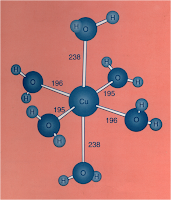
In this section, we will have a discussion for one of the consequences of crystal splitting (CFSE) stabilisation energy which is observed in a spectrum. In this section, we will explain some unique characteristics of complex compound's absorption spectrum. Furthermore, we will also see Jahn-Teller distortion which gives the unique pattern of absorption spectrum of a complex compound.

The Chemistry of d- and f- Block: The Origin of Colour in Complexes, Magnetism, and Isomerism

Image
In this section, we will have a discussion about the consequences of crystal field theory  which is the colour in complexes and magnetism. In this discussion, the crystal field theory will rationalise the origin of both properties. Furthermore, the geometry of complexes could also form the isomerism which can give different characters of complexes.

The Chemistry of d- and f- Block: Crystal Field Theory

Image
In this section we will build up our understanding in d -block complex compounds by looking the bonding in complex compounds. One of the approach is by using the crystal field theory which can derive some important properties of complexes. Then, we will see some factors that affect the crystal field splitting such as the ligands and the metal centre ion.

The Chemistry of d- and f- Block: Introduction to d- and f- Block, and Complex Chemistry

Image
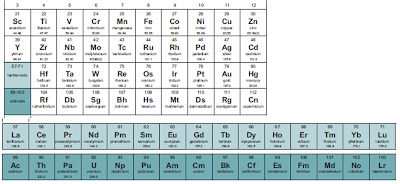
In this section, we will have a discussion about the d - and f-b lock chemistry which in this part is the introduction about d - and f - block elements and compounds. The elements of d-  and f- block in this section will include the definition of transition metal or d- block element and how the pattern is fit on the periodic table. Besides that, for the compounds of d - and f- block will mainly discuss about the complex compounds. d - and f -block elements