Posts

Showing posts with the label Synthesis

A (Brief) History of the Chemistry of Natural Products

Image
In these days, the chemistry of natural products is still a massive attraction for chemists, especially organic synthetic chemists. New substances, more or less complicated, more or less useful, are constantly discovered and investigated with all the techniques and tools that the early organic chemists could only imagine. In the course of these studies, the researchers are challenged by the preparation of the compounds which somehow drives this field forward. This time, we'll see the historical perspective of this 'ancient' research field and also future prospective that chemistry of natural products can offer.

How to Create Your Own Lilliputians?

Image
Chemical synthesis has become a great tool in exploring interesting structures such as natural products. However, this is not only limited into the natural products, the ultimate designed in miniaturisation can also be attained such as nanocar . Researchers from Houston, USA successfully created a new class of 2 nm-tall human-like, anthromorphic, compounds. This class of compound is dubbed as NanoPutians, after Liliputians from Jonathan Swift's classic Gulliver's Travel. The first edition of Jonathan Swift's Gulliver's Travel  

Strictamine

Image
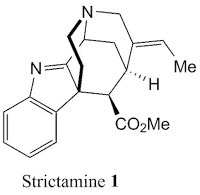
It was isolated for the first time in 1966 from the plant Rhazya stricta , strictamine (1)  has been a great interest due to its unique properties. Strictamine belongs to the group of akuammiline alkaloids which is the family of monoterpenoid indole alkaloids. This compound has been showed to inhibit the nuclear factor-𝜅B (NF-𝜅B), which plays an important role in immune and inflammatory responses. Apart from its bioactivity, strictamine has attracted synthetic chemists because its structure bearing a tricyclic unit of methanoquinolizidine. This interesting challenge causes only four groups - Garg (enantioselective), Zhu (racemic), Ohno (formal synthesis), and Gaich (formal synthesis) - have managed to complete a total synthesis of strictamine. This time on " Totally Synthesised" , we will see synthetic strategy by Gaich's group which used [2,3]-Stevens rearrangement to build the methanoquinolizidine unit.

Eleutherobin

Image
The generosity of mother nature is limitless and it will not stop giving for humankind to thrive. Besides that, nature has been a close friend with chemists especially organic chemists. Complex structures of natural products have been a great interest as it provides to develop synthetic methods to synthesise natural products. One of the 'hunting grounds' of synthetic organic chemists is the sea, and one of the products is called eleutherobin, 1 . Eleutherobin can be isolated form a species of marine soft corals Eleutherobia  collected in the Indian Ocean near Bennett's Shoal in Western Australia. Despite its rarity, eleutherobin is a potent compound against selected breast, renal, ovarian, and lung cancer cells. This highly potential compound drove Nicolaou's group to synthesise this compound.

Bending It Further: Porphyrin Nanotube

Image
The synthesis of supramolecules has become an intense interest in the recent years, especially conjugated π-system. In the previous post , a cyclic octamer of porphyrin was synthesised and it gives optical interesting properties. Increasing its dimensionality, such as into barrel-like structure, could enhance electronic delocalisation and perhaps leading to exotic properties such as Aharonov-Bohm oscillation. This property has been observed in single-walled nanotubes (SWNTs) but it hasn't yet been detected in molecular materials, so this gives motivation for synthetic chemist to synthesise the molecular SWNT to observe this exotic property. Anderson's group from Oxford University successfully synthesised porphyrin tube 1  which consists of 12 porphyrins, each of which is directly conjugated to its three neighbours.

The Nobel Prize in Chemistry 2016

Image
The Royal Swedish Academy of Sciences  has decided to award the Nobel Prize in Chemistry 2016 to \ Jean-Pierre Sauvage (University of Strasbourg, France) Sir J. Fraser Stoddart (Northwestern University, Evanston, IL, USA) Bernard L. Feringa (University of Groningen, the Netherlands) "for the design and synthesis of molecular machines"

Bending the Molecular Wires

Image
Recently, large conjugated π-systems have been a great interest due to their unique properties such as electrical conductivity, or they are commonly known as molecular wires. Taking a step further, it can be closed into a large cyclic system, i.e. macrocyle, or known as a closed loop. One of the examples of this system is porphyrin oligomers where linear conjugated porphyrin oligomers show strong long-range electronic coupling and rich non-linear optical behaviour. These unique properties provide a motivation for synthesising its macrocycle and probing its properties.

Ecteinascidin 743

Image
One of the main attractions in the chemistry of natural products, apart from facing new challenges in synthetic methodologies, is discovering a novel therapeutic agent such as ecteinascidin 743 (ET-743) . This compound was isolated for the first time as pure compound from Caribbean tunicate Ecteinascidia turbinata in 1986 by Rinehart's group. This compound possess interesting properties as a potent anti-tumour agent and ET-743 is approved in Europe, Russia and South Korea for treatment of advanced soft tissue sarcoma. From synthetic chemists' point of view, ET-743 provides an interesting challenge as it has interesting molecular architecture; comprised of eight rings, including 10-membered heterocycles and 8 stereogenic centres. This interesting molecular architecture and interesting anti-tumour properties were the motivation of its first total synthesis by E. J. Corey in 1996.

Asymmetric Aldol Reactions

Image
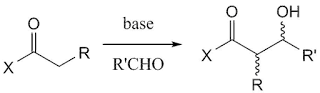
One of the well-known reactions in C-C bond formation is aldol reaction. This robust reaction has a great potential in controlling two stereocentres of the product. General aldol reaction The control on the stereocentres of the product is determined from the stereochemistry of the formed enolate; Z - and E - enolates would give different control on the outcome of aldol products.

Cytovaricin

Image
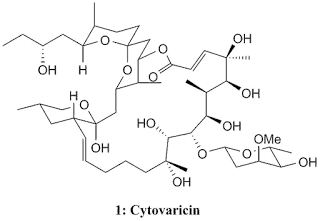
Cytovaricin, 1 , was isolated by Isono's group in 1981 from a culture of Streptomyces diastatochromogenes and the structure was elucidated in 1983 from X-ray crystallography. From its structure, cytovaricin was revealed to have such an elegant and complex structure with 22-membered macrolide structure as its framework and possessing 17 stereocentres, a spiroketal, and a glycoside unit giving four more stereocentres. This highly complex molecule give a unique challenge to organic chemists in asymmetric synthesis. The structure elucidation of cytovaricin was triggered from the finding that it is a potent inhibitor against sarcoma cells in tissue culture which makes cytovaricin a new potential as antineoplastic antibiotic. Besides that, cytovaricin appears to be related biogenetically to the oligomycin/rutamycin antibiotic family.

Resiniferatoxin

Image
If you think capsaicin is hot enough for you, you might want to think again. One of the member of a big family of daphnane diterpene is way beyond capsaicin in Scoville scale. This compound scores 16,000,000,000 Scoville Heat Unit (SHU) which is 1000 times than capsaicin itself. This chemical can be found in resin spurge ( Euphorbia resinifera ) and it is known as resiniferatoxin   (RTX).

Bongkrekic Acid

Image
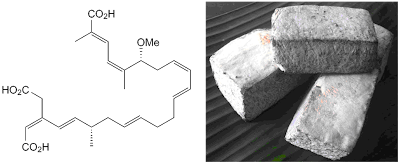
Previously in Totally Synthesised, a chemical compound called tetrodotoxin from a puffer fish makes a plate of deadly sashimi from Japan. This time a delicacy from Indonesia known as tempe bongkrek  and it is made from a fermented coconut press cake. However, a contaminated tempe bongkrek with bacterium Burkholderia cocovenans  causes this food becomes toxic due to a chemical produced by the bacterium which is bongkrek acid or bongkrekic acid. Bongkrek Acid and Tempe Bongkrek

Zaragozic Acid A/Squalestatin S1

Image
In 1992, a family of structurally related natural products was isolated from various fungal cultures by researchers at Glaxo and Merck. This chemical family is known as the squalestatins and the zaragozic acids, named after Province of Zaragoza, where the fungi were found. One of the members of the zaragozic acids/squalestatins family is zaragozic acid A/squalestatins 1. Zaragozic acid A and coat of arm of Province of Zaragoza

Amphotericin B

Image
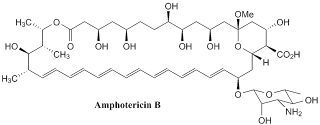
It was orginally extracted from a bacterium Streptomyces nodosus in 1955 at the Squibb Institute of Medical Research. This compound is called amphotericin B and now it is listed on the World Health Organisation's List of Essential Medicine , which is the list of the most important medications needed in basic health. Amphotericin B works as antifungal drug and is often used intravenously for systemic fungal infections. The name of amphotericin B is derived from its amphoteric property.

Palytoxin

Image
According to an ancient legend from Hawaii, on the Island of Maui there was a village of fishermen near the harbour of Hana which was haunted by a curse. One day, when the fishermen returned from the sea, one of the fishermen were missing. On the next day, another loss of fisherman caused the other fishermen assaulted a hunchbacked hermit deemed culprit of the village's misery. While ripping off the hermit's cloak, the villagers were shocked because they found rows a sharp and triangular teeth within a huge jaw. They had caught a shark god. It was clearly that the missing men was eaten by the shark god and the men mercilessly tore the shark god into pieces, burned him, and threw the ashes into a tide pool. Then, a thick brown moss started to grow one the pool's wall which caused an instant death to the victims hit by spear smeared by that moss. Thus, this moss was known  as limu-make-o-hana which means seaweed of death from Hana. From this legend, it turns out that limu-ma...

Tetrodotoxin

Image
Sashimi is one of the most famous Japanese cuisine which is made from raw fish. One of this delicacy and the most expensive one is made from a species of pufferfish which is known as fugu in Japan, the most notable one is torafugu or tiger pufferfish ( Takifugu rubipes ). One thing that make this type of sashimi is so expensive is due to labourous preparation and the adequate preparation is necessary since this fish is so toxic. This high toxicity is due to a compound called tetrodotoxin (TTX).

Sildenafil

Image
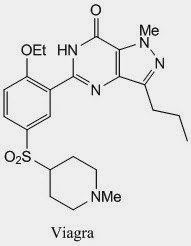
In 1998, it was quite unusual for a chemical compound became a headline in many media because of this compound. This compound was made by Pfizer and it was intended to be a heart drug but it turned out to help impotent men to have better active sex lives. This compound is called sildenafil which is the active ingredient in Viagra. Sildenafil

Synthesis of Heteroaromatic Compounds: Indoles and 6-Membered Rings

Image
In this section, we will see the synthesis of other types heteroaromatics which are indoles and 6-membered rings. Unsurprisingly, those classes of heteroaromatics are common in the organic compounds such as in pharmaceutical and in natural products.  This syntheses will be carried in the same principles as the 5-membered ring heteroaromatics, which is carbonyl chemistry.

Synthesis of Heteroaromatic Compounds: 5-Membered Rings

Image
Heteroaromatic compounds are commonly found in pharmaceutical, agrochemicals and many known chemicals in the world. In this section, we will see how heteroaromatic compounds can be synthesised and if we examine closely the key reactions in making heteroaromatic compounds are the carbonyls chemistry.