Posts

Showing posts with the label nanochemistry

How to Create Your Own Lilliputians?

Image
Chemical synthesis has become a great tool in exploring interesting structures such as natural products. However, this is not only limited into the natural products, the ultimate designed in miniaturisation can also be attained such as nanocar . Researchers from Houston, USA successfully created a new class of 2 nm-tall human-like, anthromorphic, compounds. This class of compound is dubbed as NanoPutians, after Liliputians from Jonathan Swift's classic Gulliver's Travel. The first edition of Jonathan Swift's Gulliver's Travel  
Dissipative Self-Assembled Vesicular Nanoreactor

Image
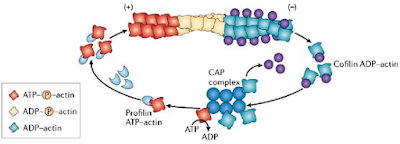
In nature, self-assembly has been exploited in many ways to create molecular systems for biological processes. This idea has inspired many chemists in recent decade to use self-assembly to access various function of molecular level. However, there is a major difference between the synthetic and natural self-assembled systems. The synthetic self-assembly produces the most thermodynamically stable product. On the other hand, many natural self-assembly processes are energetically uphill and require a continuous consumption of energy to maintain its structure; this is referred as dissipative self assembly. The formation and dissociation of actin filament, one of the example dissipative self-assembly. (J. Baum, A. T. Papenfuss, B. Baum, T. P. Speed, and A. F. Cowman, Nature Rev. Microbiol. , 2006, 4 , 621-628) Recently, researchers from University of Padova successfully found a novel strategy for the dissipative vesicular structure that are stable to maintain its shape in the present ...

Powering the Molecular World

Image
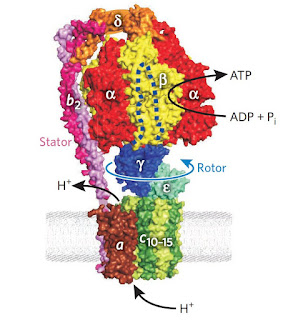
In biological process, molecular machines are one of the examples of the most intricate functional molecules and have been attracted many chemists recently. Inspired from this idea, synthetic molecular machines have been developed ranging from synthesizers to motors, but there are no synthetic molecule machines that operate autonomously using chemical energy; in biological process ATP is used as the chemical energy or fuel. One of the example of motor protein: ATP synthase. (J. Weber, Nat. Chem. Biol. , 2010, 6  794-795) Leigh's group from the University of Manchester successfully created a system in which small molecular ring is transported around a cyclic molecular track when powered by irreversible reaction.

Micelle-Encapsulated Carbon Nanotubes

Image
Single-walled carbon nanotubes (SWNTs) has been a great interest due to their unique properties and those have motivated researchers to investigate their use in variety of application such as electrostatic discharge, structural reinforcement, and thermal dissipation. However, SWNT has main weakness that hinders the development of its application which is poor solubility and processibility. Many processing techniques and modification on the surface of nanotubes, either covalently or noncovalently, have been developed. Scanning tunnelling microscopy image of nanotubes. (T. W. Odom, J.-L. Huang, and C. M. Lieber, J. Phys.: Condens. Matter , 2002, 14 , R145-R167). Taton's group from University of Minnesota developed a way to encapsulate carbon nanotubes using crosslinked, amphiphilic copolymer micelles.

Dilution-Induced Aggregation of Nanoparticles

Image
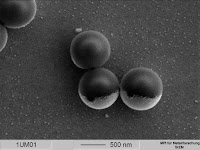
The ability of nanoparticles to self-assemble forming larger structures is determined by the details of the forces between particles. This mean of interaction has led to novel concepts in self-assembly such as in colloids and Janus particles (type of nanoparticles with two or more physical properties of its surface). Recently, some models that include attractive region or 'patches' on the surface of nanoparticles have been made and predict intricate modes of assembly and these interactions are also important in a range of phenomena including protein aggregation and crystallisation. Example of Janus particles (accessed http://www.pi2.uni-stuttgart.de/cms/index.php?article_id=156) Meijer's group Eindhoven University of Technology successfully synthesised 6-nm nanoparticles with dynamic hydrophobic patches and it can self-assemble reversibly in water.

Four-Wheel Drive in Molecular Level

Image
Machinery has propelled human civilisation into another level by helping us to perform tasks beyond our capability. In decades, human has made different type of machines with various of sizes; from enormous machine into molecular-size machinery. The ideas of molecular-size machinery are inspired from the nature in the cellular level such as ATP synthase motor and kinesin transporter. ATP synthase motor (right, J. Weber, Nat. Chem. Biol. , 2010, 6 , 794-795) and Feringa's nanocar (left, ©Johan Jarnestad/The Royal Swedish Academy of Sciences) One of the prominent examples of the molecular machines is Feringa's nanocar  where the molecule is propelled by four rotating molecular motors.