Posts

Showing posts with the label supramolecules

Dissipative Self-Assembled Vesicular Nanoreactor
Image
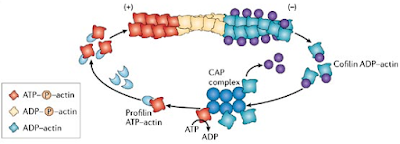
In nature, self-assembly has been exploited in many ways to create molecular systems for biological processes. This idea has inspired many chemists in recent decade to use self-assembly to access various function of molecular level. However, there is a major difference between the synthetic and natural self-assembled systems. The synthetic self-assembly produces the most thermodynamically stable product. On the other hand, many natural self-assembly processes are energetically uphill and require a continuous consumption of energy to maintain its structure; this is referred as dissipative self assembly. The formation and dissociation of actin filament, one of the example dissipative self-assembly. (J. Baum, A. T. Papenfuss, B. Baum, T. P. Speed, and A. F. Cowman, Nature Rev. Microbiol. , 2006, 4 , 621-628) Recently, researchers from University of Padova successfully found a novel strategy for the dissipative vesicular structure that are stable to maintain its shape in the present ...
Powering the Molecular World

Image
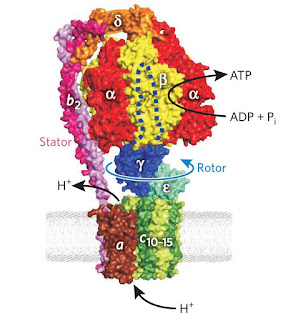
In biological process, molecular machines are one of the examples of the most intricate functional molecules and have been attracted many chemists recently. Inspired from this idea, synthetic molecular machines have been developed ranging from synthesizers to motors, but there are no synthetic molecule machines that operate autonomously using chemical energy; in biological process ATP is used as the chemical energy or fuel. One of the example of motor protein: ATP synthase. (J. Weber, Nat. Chem. Biol. , 2010, 6  794-795) Leigh's group from the University of Manchester successfully created a system in which small molecular ring is transported around a cyclic molecular track when powered by irreversible reaction.

Dilution-Induced Aggregation of Nanoparticles

Image
The ability of nanoparticles to self-assemble forming larger structures is determined by the details of the forces between particles. This mean of interaction has led to novel concepts in self-assembly such as in colloids and Janus particles (type of nanoparticles with two or more physical properties of its surface). Recently, some models that include attractive region or 'patches' on the surface of nanoparticles have been made and predict intricate modes of assembly and these interactions are also important in a range of phenomena including protein aggregation and crystallisation. Example of Janus particles (accessed http://www.pi2.uni-stuttgart.de/cms/index.php?article_id=156) Meijer's group Eindhoven University of Technology successfully synthesised 6-nm nanoparticles with dynamic hydrophobic patches and it can self-assemble reversibly in water.

Bending It Further: Porphyrin Nanotube

Image
The synthesis of supramolecules has become an intense interest in the recent years, especially conjugated π-system. In the previous post , a cyclic octamer of porphyrin was synthesised and it gives optical interesting properties. Increasing its dimensionality, such as into barrel-like structure, could enhance electronic delocalisation and perhaps leading to exotic properties such as Aharonov-Bohm oscillation. This property has been observed in single-walled nanotubes (SWNTs) but it hasn't yet been detected in molecular materials, so this gives motivation for synthetic chemist to synthesise the molecular SWNT to observe this exotic property. Anderson's group from Oxford University successfully synthesised porphyrin tube 1  which consists of 12 porphyrins, each of which is directly conjugated to its three neighbours.

The Nobel Prize in Chemistry 2016

Image
The Royal Swedish Academy of Sciences  has decided to award the Nobel Prize in Chemistry 2016 to \ Jean-Pierre Sauvage (University of Strasbourg, France) Sir J. Fraser Stoddart (Northwestern University, Evanston, IL, USA) Bernard L. Feringa (University of Groningen, the Netherlands) "for the design and synthesis of molecular machines"

Bending the Molecular Wires

Image
Recently, large conjugated π-systems have been a great interest due to their unique properties such as electrical conductivity, or they are commonly known as molecular wires. Taking a step further, it can be closed into a large cyclic system, i.e. macrocyle, or known as a closed loop. One of the examples of this system is porphyrin oligomers where linear conjugated porphyrin oligomers show strong long-range electronic coupling and rich non-linear optical behaviour. These unique properties provide a motivation for synthesising its macrocycle and probing its properties.

Self-Assembled Metal Cage Complex Catalysis

Image
Recently, self-assembled metal cage complexes have become new interest in supramolecular chemistry. This new interest is not only in the complex geometry but also in its application as catalyst. The idea of metal cage complex catalyst arises from the fact that it can act as host for small molecules. This means the catalysis happens within the metal cage complex. Besides that, the advantage of using metal cage complex compare to the conventional organic supramolecules is the cavity of the cage can be easily formed by self-assembly process from much simpler components. The predictable geometry of the metal centre helps to design the suitable cavity for the process. To ensure metal cage complex acts as an efficient catalyst, it needs to fulfill certain criteria. Firstly, metal cage complex needs to be able to bind the substrates within the cavity long enough to do the reaction. Besides that, it has to accelerate the substrate reaction, which is the key definition of a catalyst, by inc...

Design and Synthesis of Self-Assembled Metal Cage Complex

Image
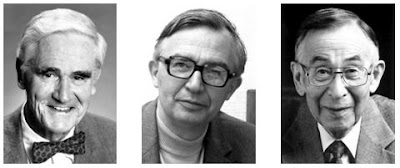
In the late 20th century, Jean-Marie Lehn coined the definition of supramolecular chemistry as " the chemistry of molecular assemblies and of the intermolecular bond ". In this new type of "molecules" the main stabilisation factor is not solely on the covalent chemistry but the intermolecular interactions such as hydrogen bonding and van der Waals interactions. As a side note, Jean-Marie Lehn was awarded the 1987 Nobel Prize in Chemistry with Donald J. Cram and Charles J. Pedersen for " their development and use of molecule with structure-specific interactions of high selectivity ". Donald J. Cram, Jean-Marie Lehn and Charles J. Pedersen (left to right) One of the examples of supramolecular chemistry is self-assembled metal cage complex which has been a great interest recently.