Posts

Showing posts with the label Polymer Chemistry

Bulk Heterojunction Solar Cell
Image
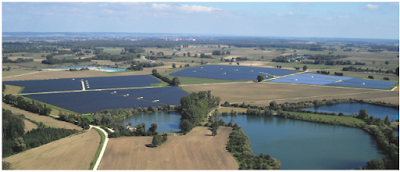
25.7 MW Lauingen Energy Park, Germany As part of solutions for the climate change, the demand for 'clean' energy has increased in the recent years. One of the piece of technologies that can fulfil this demand is solar cell which it can harness the solar energy. At this stage, the conventional solar cell, which is made of a thick layer of doped-silicon, is very expensive and the manufacturing process is energy consuming process. Another type of solar cell, dye sensitised solar cell (DSSC) or Grätzell cell, can be a solution for the expensive silicon solar cell. Instead of expensive silicon as semiconductor, cheaper TiO 2 is used and ruthenium-based complex compound as solar light harvester. However, this cell has a problem with solvent leakage, which can be  not environmentally friendly. The efficiency of this cell is also a problem; DSSC's efficiency is up to 11% while Si-based solar cell can be up to 25%. To address these problems, another type of solar cell has been ...

How to Create Your Own Lilliputians?

Image
Chemical synthesis has become a great tool in exploring interesting structures such as natural products. However, this is not only limited into the natural products, the ultimate designed in miniaturisation can also be attained such as nanocar . Researchers from Houston, USA successfully created a new class of 2 nm-tall human-like, anthromorphic, compounds. This class of compound is dubbed as NanoPutians, after Liliputians from Jonathan Swift's classic Gulliver's Travel. The first edition of Jonathan Swift's Gulliver's Travel  

Micelle-Encapsulated Carbon Nanotubes

Image
Single-walled carbon nanotubes (SWNTs) has been a great interest due to their unique properties and those have motivated researchers to investigate their use in variety of application such as electrostatic discharge, structural reinforcement, and thermal dissipation. However, SWNT has main weakness that hinders the development of its application which is poor solubility and processibility. Many processing techniques and modification on the surface of nanotubes, either covalently or noncovalently, have been developed. Scanning tunnelling microscopy image of nanotubes. (T. W. Odom, J.-L. Huang, and C. M. Lieber, J. Phys.: Condens. Matter , 2002, 14 , R145-R167). Taton's group from University of Minnesota developed a way to encapsulate carbon nanotubes using crosslinked, amphiphilic copolymer micelles.

Physical Forms of Polymerisation

Image
After discussing the chemical forms of polymerisation such as step and chain polymerisations, this section will discuss the physical forms of polymerisation. In general, there are 6 physical forms of polymerisation which monomers can be polymerised. In some cases, the polymerisations have a better size control which makes it attractive for industry.

Ziegler-Natta Polymerisation

Image
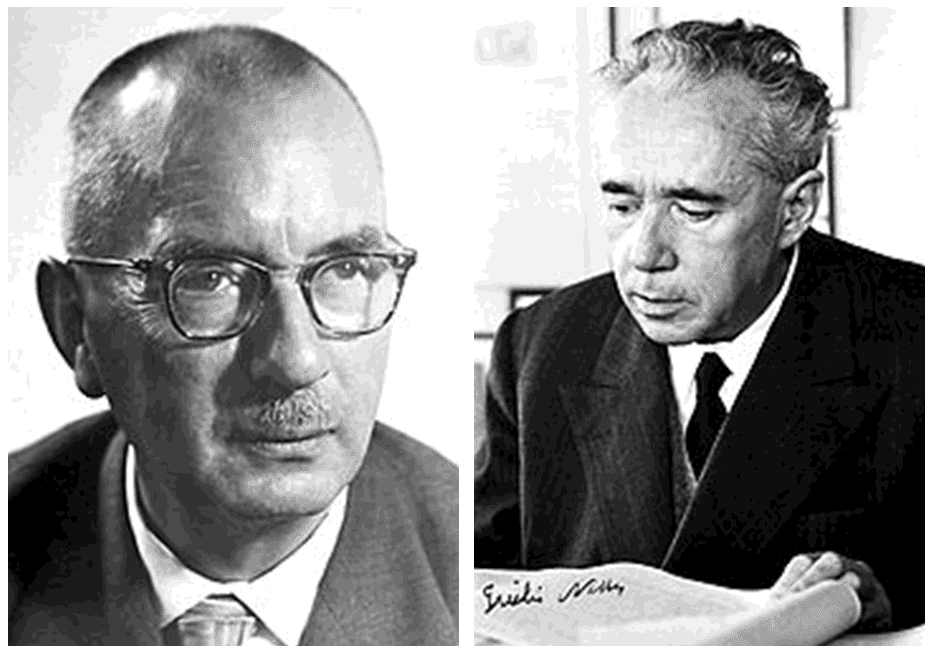
This time, we will see another method of polymerisation which use transition metal complex chemistry in the process. This polymerisation is called Ziegler-Natta (ZN) polymerisation and it is named after German chemist Karl Ziegler and Italian chemist Giulio Natta who developed this polymerisation initially. Ziegler and Natta were awarded 1963 Nobel Prize in chemistry. K. Ziegler (left) and G. Natta (right)

Anionic and Cationic Polymerisations

Image
The other types of chain polymerisations, besides free radical polymerisations, are anionic and cationic polymerisation. In this case, the active side is anionic or cationic polymerisation. This section, we will discuss anionic polymerisation then followed by cationic polymerisation.

Free Radical Polymerisations

Image
Chain polymerisation is probably the most common polymerisation that is widely used, either for lab or industrial scale and one the example is free radical polymerisation. There is an obvious reason why this is callen free radical polymerisation and it is simply due to using radical species as the active species. In the same way with step polymerisation , this section will discuss mainly about ita kinetics.

Step Polymerisations

Image
One of the processes to make polymers is called step polymerisation and this process used to be called a condensation polymerisation due to the formation small byproduct or condensate. In this section, we will see the chemistry behind step polymerisations especially in polyesterification and its kinetics.

Physical Properties of Polymers

Image
Polymers are well known for its wide range of application in daily life. One of the main factor that determine its application is by tuning its physical properties. This section will discuss about the properties in solution and in solid state, especially about melting temperature  T m  and glass transition temperature  T g . Lastly, we will see the physical properties of elastomers.

Polymer Chemistry: Molecular Weight of Polymers

Image
One of the chemical properties of a molecule is its molecular weight which is unique for every molecule. However, in synthetic polymer this is a bit of problem because of the nature of polymerisation reaction which produces different lengths of polymeric chains. This means synthetic polymers are polydisperse, no unique molecular weight, unlike small molecules. Therefore, the molecular weight of polymers is measured using molecular weight distribution (MWD).

Organic Chemistry for A-Level: Polymers

Image
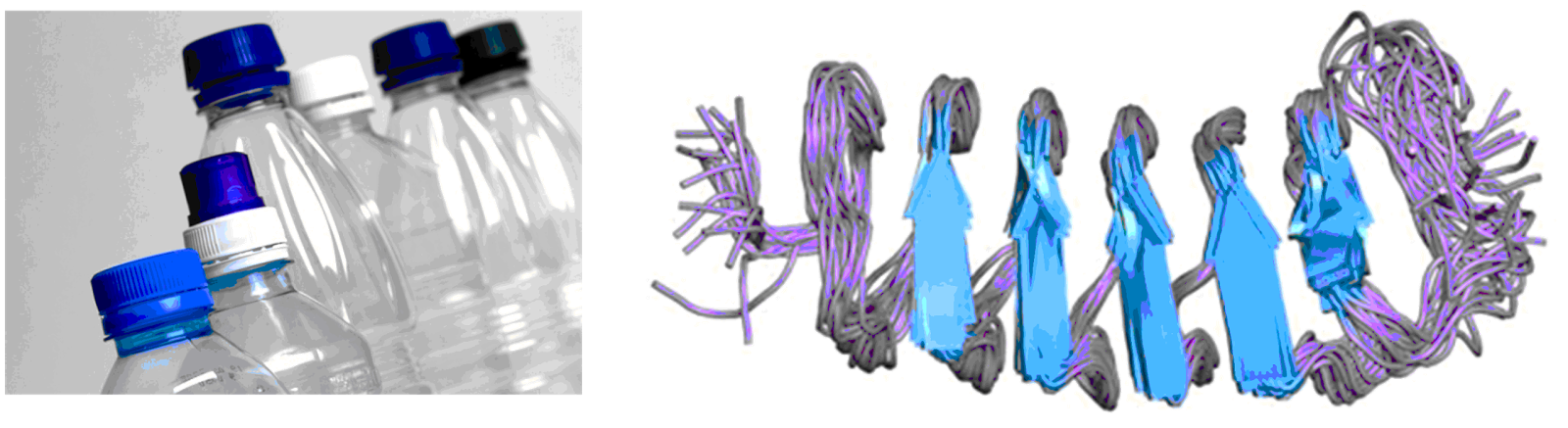
In this final section for organic chemistry for A-level, we will see the chemistry of polymers. This section will discuss the basic principles in polymer chemistry, including type of polymers and polymerisation reaction. This section will be concluded by extension section about inorganic polymers. Synthetic vs Natural Polymers Plastic Bottle vs Antifreeze protein from Tenebrio molitor

Radicals and Us I: the Fundamentals and Polymer Manufacture

Image
In this section we will explore the chemistry behind the radicals and how radicals relate closely in our world. This part we will explore the fundamentals of radical which include how to generate radical and their stability. After that, we will see how radicals can be used in daily life, mainly in polymer synthesis. Radical, single-electron species

How To Make A Paper? (Chemists' Recipe)

Image
In this section, we have a discussion about the chemistry of paper manufacturer. We will see the chemistry of paper especially the processing to make a paper and it will be concluded the future trend of paper. To begin with, we will have a time travel through the history of paper.

The Chemistry of Ice Cream

Image
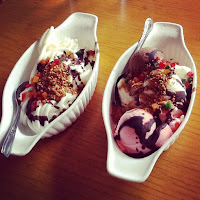
In this section, we will see the chemistry behind the recipe of ice cream. In more detail, we will see the chemistry recipe of ice cream, the processing of ice cream, and the transporting ice cream can face problems. Moreover, this section will be concluded by the future possible development of ice cream. To begin with, we will start with some figures related to ice cream.

Chemistry of the Clinic - Drugs and Tissue Engineering

Image
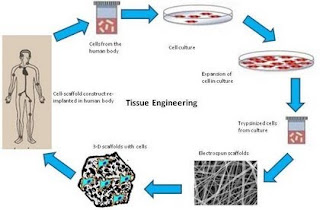
In this section, we will have a discussion around the drugs delivery and tissue engineering. In discussion about drugs delivery, we will see not only the topical methods, but also how to control the release of active pharmaceutics components. Lastly, we will see about tissue engineering with focus on the scaffolding.

Chemistry of the Clinic - Teeth and Eyes

Image
In this section, we will have a look how dentists and optometrists apply chemistry in their works. This section will have a look about fillings and adhesive that are used by dentists, and contact lenses from optometrists. In general, this section will discuss how polymer plays important roles for dentists and optomerists. Teeth

Chemistry of the Clinic - Blood

Image
This part will have a look how chemistry can be applied in healthcare and in this part will have a look for materials that have contact with blood and use in cardiovascular (heart and the blood vessels). As an introduction, the world healthcare market is approximately  £ 4000 billion and globally, the pharmaceutical market is estimated to be  £200 billion. Besides that, the world medical device markets have been estimated to be around  £120 billion and regenerative medicine is estimated worth  £1 000 billion by 2020. Synthetic materials in the body

The Chemistry of Beauty

Image
In this part, we will see some example of the cosmetics product and the chemistry behind the products. Besides that, we will see how the chemistry can give the function of the different products. Woman at Her Toilette Henri Marie Raymond de Toulouse-Lautrec-Monfa (1889) A cosmetic can be defined as a substance that is applied directly to the human body for " cleansing, beautifying, promoting attractiveness, or altering the appearance ". Hence, this the example for cosmetic products: Shampoo, hair dyes, hand and body soaps, skin creams, lipsticks, mascara, nail varnish, perfumes, colognes, deodorants, mouthwashes, anti-perspirants, toothpastes, and other cosmetics and toiletries.

Style Your Hair With Chemistry

Image
In this section we will see how chemistry create our daily hair product, from shampoo to hair spray. Besides that, we will see the chemical compounds that make the function of the hair care product, and to begin, we start from a brief overview about hair care products.

Cleaning Your Clothes with Chemistry

Image
In this section, we will see the laundry formulation and how the formulation can clean your clothes.   The soap recipe is basically an ancient technology. A soap-like material was found in clay cylinders dating to 2800 BC during excavation of Babylon. The inscription confirmed that fats were boiled with ashes, but the material was used as a hair styling aid. Then, in the Ebers Papyrus from ancient Egypt (ca 1500 BC) is the oldest known medical textbook and one of the content is a soap-like recipe. It describes combining animal and vegetable oils with alkaline salts to form a soap-like material for was washing, as well as for treating skin diseases. Moreover, in ancient Rome at Mount. Sapos which was the place for regular animal sacrifices and the fats ran off from the hill into the Tiber river with the ashes and it was found as the best place to wash clothes at the river bank. The Ebers Papyrus