Posts

Cytovaricin

Image
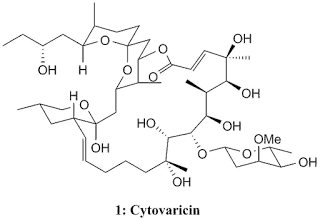
Cytovaricin, 1 , was isolated by Isono's group in 1981 from a culture of Streptomyces diastatochromogenes and the structure was elucidated in 1983 from X-ray crystallography. From its structure, cytovaricin was revealed to have such an elegant and complex structure with 22-membered macrolide structure as its framework and possessing 17 stereocentres, a spiroketal, and a glycoside unit giving four more stereocentres. This highly complex molecule give a unique challenge to organic chemists in asymmetric synthesis. The structure elucidation of cytovaricin was triggered from the finding that it is a potent inhibitor against sarcoma cells in tissue culture which makes cytovaricin a new potential as antineoplastic antibiotic. Besides that, cytovaricin appears to be related biogenetically to the oligomycin/rutamycin antibiotic family.

Self-Assembled Metal Cage Complex Catalysis

Image
Recently, self-assembled metal cage complexes have become new interest in supramolecular chemistry. This new interest is not only in the complex geometry but also in its application as catalyst. The idea of metal cage complex catalyst arises from the fact that it can act as host for small molecules. This means the catalysis happens within the metal cage complex. Besides that, the advantage of using metal cage complex compare to the conventional organic supramolecules is the cavity of the cage can be easily formed by self-assembly process from much simpler components. The predictable geometry of the metal centre helps to design the suitable cavity for the process. To ensure metal cage complex acts as an efficient catalyst, it needs to fulfill certain criteria. Firstly, metal cage complex needs to be able to bind the substrates within the cavity long enough to do the reaction. Besides that, it has to accelerate the substrate reaction, which is the key definition of a catalyst, by inc...

Design and Synthesis of Self-Assembled Metal Cage Complex

Image
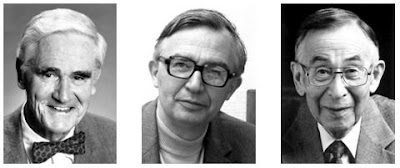
In the late 20th century, Jean-Marie Lehn coined the definition of supramolecular chemistry as " the chemistry of molecular assemblies and of the intermolecular bond ". In this new type of "molecules" the main stabilisation factor is not solely on the covalent chemistry but the intermolecular interactions such as hydrogen bonding and van der Waals interactions. As a side note, Jean-Marie Lehn was awarded the 1987 Nobel Prize in Chemistry with Donald J. Cram and Charles J. Pedersen for " their development and use of molecule with structure-specific interactions of high selectivity ". Donald J. Cram, Jean-Marie Lehn and Charles J. Pedersen (left to right) One of the examples of supramolecular chemistry is self-assembled metal cage complex which has been a great interest recently.

The Nobel Prize in Chemistry 2015

Image
The Royal Swedish Academy of Sciences has decided to award the Nobel Prize in Chemistry for 2015 to Tomas Lindahl (Francis Crick Institute and Clare Hall Laboratory, Hertfordshire, UK), Paul Modrich (Howard Hughes Medical Institute and Duke University School of Medicine, Durham, NC, USA), and Aziz Sancar (University of North Carolina, Chapel Hill, NC, USA) “for mechanistic studies of DNA repair"

Resiniferatoxin

Image
If you think capsaicin is hot enough for you, you might want to think again. One of the member of a big family of daphnane diterpene is way beyond capsaicin in Scoville scale. This compound scores 16,000,000,000 Scoville Heat Unit (SHU) which is 1000 times than capsaicin itself. This chemical can be found in resin spurge ( Euphorbia resinifera ) and it is known as resiniferatoxin   (RTX).

Bongkrekic Acid

Image
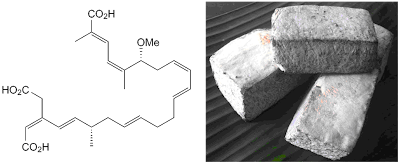
Previously in Totally Synthesised, a chemical compound called tetrodotoxin from a puffer fish makes a plate of deadly sashimi from Japan. This time a delicacy from Indonesia known as tempe bongkrek  and it is made from a fermented coconut press cake. However, a contaminated tempe bongkrek with bacterium Burkholderia cocovenans  causes this food becomes toxic due to a chemical produced by the bacterium which is bongkrek acid or bongkrekic acid. Bongkrek Acid and Tempe Bongkrek

Zaragozic Acid A/Squalestatin S1

Image
In 1992, a family of structurally related natural products was isolated from various fungal cultures by researchers at Glaxo and Merck. This chemical family is known as the squalestatins and the zaragozic acids, named after Province of Zaragoza, where the fungi were found. One of the members of the zaragozic acids/squalestatins family is zaragozic acid A/squalestatins 1. Zaragozic acid A and coat of arm of Province of Zaragoza