Posts

Heterocyclic Chemistry: Properties of Heteroaromatic Compounds

Image
In this section, we will see the properties of heteroaromatic compounds especially their ability as nucleophile and as base. Besides that, we will also see the 5-membered heteroaromatic can also act as an acid. All those properties can be derived from its structure and the bonding.  Just to reiterate again for this section, the quoted value of p K a  in the discussion of basicity is the p K a  of its conjugate acid. 

Heterocyclic Chemistry: Properties of Saturated Heterocyclic Compounds

Image
In this section, we will continue to see into the properties of heterocylic compounds using the information about its bonding and structure. Besides that, in this section will mainly discuss about its basicity.

Heterocyclic Chemistry: Structure

Image
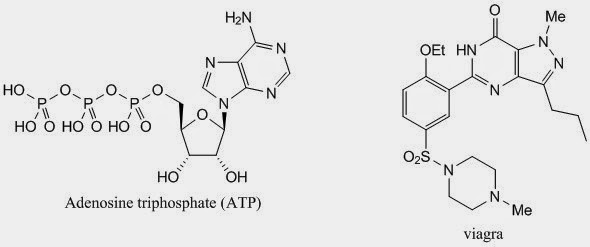
Heterocyclic compounds are very common feature in most of the known molecules, especially in nature. They can be found in DNA, alkaloids and vitamins but they also an important constituent of agrochemicals, pharmaceuticals etc. In this section, we will try to explore about the structure and their reactivity, especially as the basicity of heterocyclic compounds.

The Art of the Jedi Knight: the Chemistry of Laser

Image
The laser action is notably used in science fiction movie such as the lightsabers in Star Wars movies. However, laser itself also has been used in field of science since for a long time such as spectroscopy. This time, we will see the basic principles of the chemistry behind laser and also some real examples of the application of laser. 

The Nobel Prize in Chemistry 2014

Image
The Royal Swedish Academy of Sciences has decided to award the Nobel Prize in Chemistry for 2014 to Eric Betzig (Janelia Research Campus, Howard Hughes Medical Institute, Ashburn, VA, USA,),  Stefan W. Hell (Max Planck Institute for Biophysical Chemistry, Göttingen, and German Cancer Research Center, Heidelberg, Germany), and  William E. Moerner (Stanford University, Stanford, CA, USA) “for the development of super-resolved fluorescence microscopy"

The Nobel Prize in Chemistry 2013

Image
The Royal Swedish Academy of Sciences has decided to award the Nobel Prize in Chemistry for 2013 to Martin Karplus (Université de Strasbourg, France and Harvard University, Cambridge, MA, USA), Michael Levitt (Stanford University School of Medicine, Stanford, CA, USA), and Arieh Warshel (University of Southern California, Los Angeles, CA, USA) “for the development of multiscale models for complex chemical systems”

The Free Energy and the Chemical Equilibrium: Combining the Laws of Thermodynamics

Image
In this section, we will build up our concepts about the 3 laws of thermodynamics (the 1st, 2nd, and the 3rd laws of thermodynamics) to bring the concept of spontaneity of reactions based on new parameter which is the free energy. In this section, there are 2 types of free energy which are the Helmholtz and Gibbs free energies, and we will have a deeper discussion in Gibbs free energy because it is used more common in chemistry. Furthermore, we will see briefly how the free energy is related to the equilibrium process. Hermann Ludwig Ferdinand von Helmholtz (left) and Josiah Willard Gibbs (right) The founders of the concept of free energies